
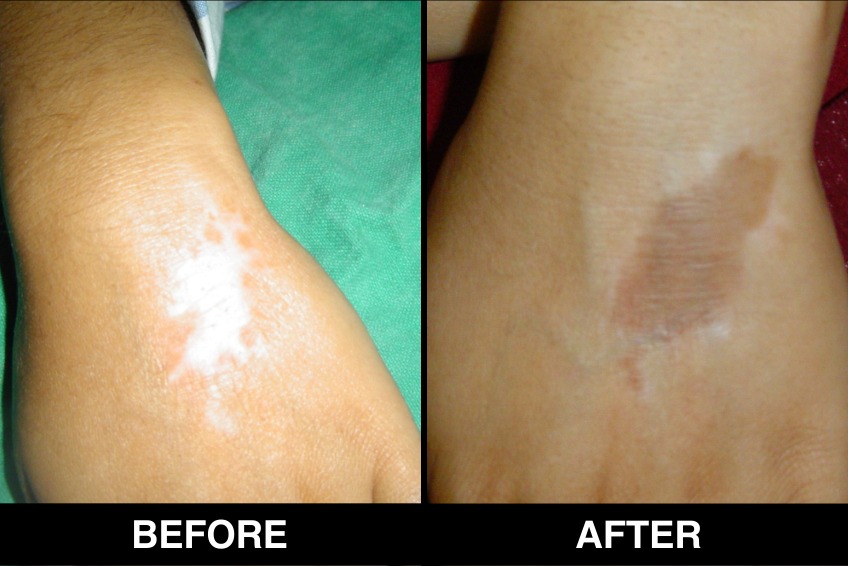
Understanding White Spots
Vitiligo is a skin condition where patches of skin lose their pigment, appearing white or lighter than the surrounding skin. It occurs when melanocytes — the cells responsible for skin color — are destroyed or stop functioning. Vitiligo can affect any part of the body, including the face, hands, arms, and even the hair and inside of the mouth. It is not contagious or life-threatening, but it can significantly impact a person's appearance and self-confidence. At Dermacian Jaipur, our dermatologists provide comprehensive diagnosis and advanced treatment options to help manage vitiligo and restore pigmentation.
Signs & Symptoms
Causes & Risk Factors
Autoimmune response — the immune system mistakenly attacks and destroys melanocytes
Genetic factors — family history increases the risk of developing vitiligo
Environmental triggers — sunburn, chemical exposure, or skin trauma may trigger onset
Oxidative stress — an imbalance of free radicals may damage melanocytes
Viral or bacterial infections that may trigger autoimmune responses
Stress — severe emotional or physical stress may contribute to onset or worsening
When to See a Dermatologist
- You notice new white patches on your skin for the first time
- Existing white patches are spreading or increasing in size
- You experience rapid depigmentation over weeks or months
- The condition is affecting your self-esteem or mental health
- You have a family history of vitiligo and notice skin changes
- You develop sunburn easily in depigmented areas
Treatment Options at Dermacian
Topical Corticosteroids
Prescription steroid creams that may help restore some skin color, especially when started early in the course of the disease.
Topical Calcineurin Inhibitors
Non-steroid creams (tacrolimus, pimecrolimus) that modulate the immune response, effective for small areas especially on the face and neck.
Phototherapy (PUVA/UVB)
Controlled exposure to ultraviolet light that stimulates melanocyte activity. Narrow-band UVB is the most common and effective form of light therapy for vitiligo.
Excimer Laser
A targeted form of UVB light therapy using a 308nm excimer laser, effective for localized vitiligo patches with fewer side effects than whole-body phototherapy.
Vitiligo Surgery
For stable vitiligo that hasn’t responded to other treatments, surgical options include punch grafting, blister grafting, and melanocyte transfer to repigment affected areas.
Depigmentation Therapy
For extensive vitiligo affecting most of the body, removing remaining pigment to create a uniform skin tone may be an option. This is a permanent, last-resort treatment.
Prevention & Management Tips

Doctor's Note
"Vitiligo is not contagious. Early treatment offers the best chance of repigmentation. Surgery is only for stable patches."
— Dr. Vivek Rungta, Dermatologist & Hair Transplant Specialist