
Urticaria Urticaria Variable 4 min read

Urticaria (Hives)

Treatment for hives and allergy-related skin conditions.

Urticaria (Hives)

Duration

Hours to weeks

Common Age

Any age

Recovery

Hours to days

Severity

Variable

Understanding Urticaria

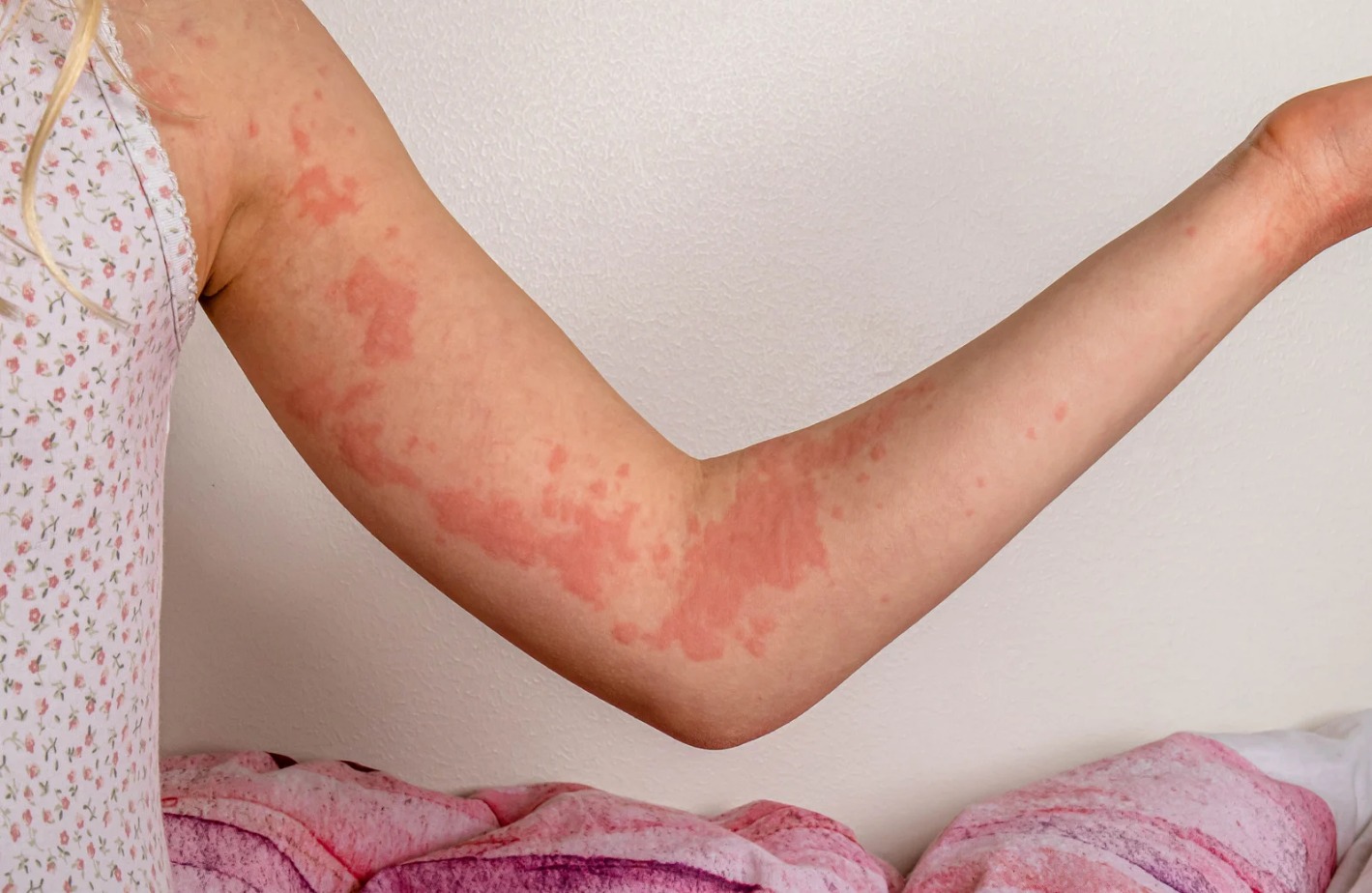
Urticaria, commonly known as hives, is a skin reaction that causes raised, itchy welts (wheals) on the skin. It can be acute (lasting less than 6 weeks) or chronic (lasting more than 6 weeks). Hives can be triggered by allergies, infections, stress, medications, or sometimes have no identifiable cause. At Dermacian Jaipur, our dermatologists diagnose the underlying cause and provide effective treatment to control symptoms.

Signs & Symptoms

Raised, red or skin-colored welts (wheals) of varying sizes
Intense itching
Welts that change shape, size, and location within hours
Individual hives that appear and disappear within 24 hours
Swelling beneath the skin (angioedema), especially of lips, eyes, and face
Welts that blanch (turn white) when pressed
In chronic cases — hives persisting or recurring for more than 6 weeks

Causes & Risk Factors

1

Allergic reactions — food (nuts, shellfish, eggs), medications, insect bites

2

Infections — viral infections (common in children), bacterial infections, parasitic infections

3

Medications — antibiotics (penicillin), NSAIDs (aspirin, ibuprofen), blood pressure medications

4

Physical triggers — pressure, cold, heat, sunlight, water, exercise

5

Stress — emotional or physical stress can trigger hives

6

Autoimmune conditions — thyroid disorders, lupus

7

Contact allergens — latex, plants, animal dander, cosmetics

8

Idiopathic — in many chronic cases, no specific cause is identified

When to See a Dermatologist

  • Hives are accompanied by difficulty breathing or throat swelling (emergency)
  • Hives persist for more than a few days
  • You have chronic hives lasting more than 6 weeks
  • Hives are severe, widespread, or interfering with sleep and daily activities
  • You develop hives after starting a new medication
  • Hives are accompanied by fever, joint pain, or other systemic symptoms
Schedule a Consultation →

Treatment Options at Dermacian

1

Antihistamines

First-line treatment. Non-drowsy second-generation antihistamines (cetirizine, loratadine, fexofenadine) control itching and reduce hives. May need higher doses for chronic cases.

2

H2 Blockers

Medications like ranitidine or famotidine that work alongside antihistamines for improved symptom control in resistant cases.

3

Oral Corticosteroids

Short courses for severe, acute flare-ups. Not recommended for long-term use due to side effects.

4

Omalizumab (Biologic)

Injectable medication for chronic spontaneous urticaria that doesn’t respond to antihistamines. Highly effective with monthly injections.

5

Cyclosporine

Immunosuppressant medication for severe, treatment-resistant chronic urticaria. Used under close medical monitoring.

6

Trigger Identification

Detailed history, allergy testing, and sometimes elimination diets to identify and avoid specific triggers.

Prevention & Management Tips

Identify and avoid known triggers (foods, medications, environmental allergens)
Take prescribed antihistamines regularly if you have chronic hives
Manage stress through yoga, meditation, or regular exercise
Avoid known medication triggers — always inform doctors of drug allergies
Keep a symptom diary to identify patterns and triggers
Avoid extreme temperatures if temperature triggers your hives
Wear loose, comfortable clothing to avoid pressure-induced hives
Carry emergency antihistamines if you have a history of severe reactions
Dr. Vivek Rungta

Doctor's Note

"Urticaria can be triggered by food, medications, infections, or stress. Identifying and avoiding triggers is key."

— Dr. Vivek Rungta, Dermatologist & Hair Transplant Specialist

Share this page:

Patient Stories

What Our Patients Say

"Visited here to consult Skin ulcers on the hands. Both hands are in very bad situation. Consulted many doctors and hospitals without any improvement. Thanks to Dr Vivek Rungta for treating this difficult and rare disease."

— शंकर शाहू

"Results are very goods in pigmentation"

— Zohra Khan

"In my opinion Dr Vivek Rungta is the excellent skin and cosmetic surgeon. He do very clean skin surgeries, his expertise in laser skin treatments is class apart. Results of Laser treatment depends not only on the quality of the machine but also on expert hands of the treating person, who can effectively use that device and bring the best results out of it. That's why my first choice is Dermacian Clinic where all the laser machine are imported from the best companies in the world and doctor is trained to operate all these expensive Laser machines. Recommended to everyone who is looking for best skin laser treatments."

— Jp Kashyap

Questions & Answers

FAQs About Urticaria in Jaipur

Are hives dangerous?
Most hives are not dangerous. However, if accompanied by difficulty breathing, throat swelling, dizziness, or rapid heartbeat, seek emergency care immediately — this may be anaphylaxis, a life-threatening reaction.
How long do hives last?
Acute hives last less than 6 weeks and often resolve in days. Chronic hives last more than 6 weeks and may persist for months or years. Individual welts typically appear and disappear within 24 hours.
Can chronic hives be cured?
Chronic hives can be effectively controlled with medications. In many cases, they resolve on their own over time (50% resolve within 1 year, 80% within 5 years). Identifying and avoiding triggers helps prevent recurrence.
What tests are done for chronic hives?
We may recommend blood tests (CBC, thyroid function, ESR), allergy tests, and sometimes autoimmune panels to identify underlying causes. In many cases, tests are normal and treatment is empirical.
4.9 Rating · 909 Happy Patients

Get Treatment for Urticaria

Schedule your consultation with Jaipur's top dermatologists today.

Chat on WhatsApp Call +91 9461665511